
Commercial locksmith in Rockville, MD
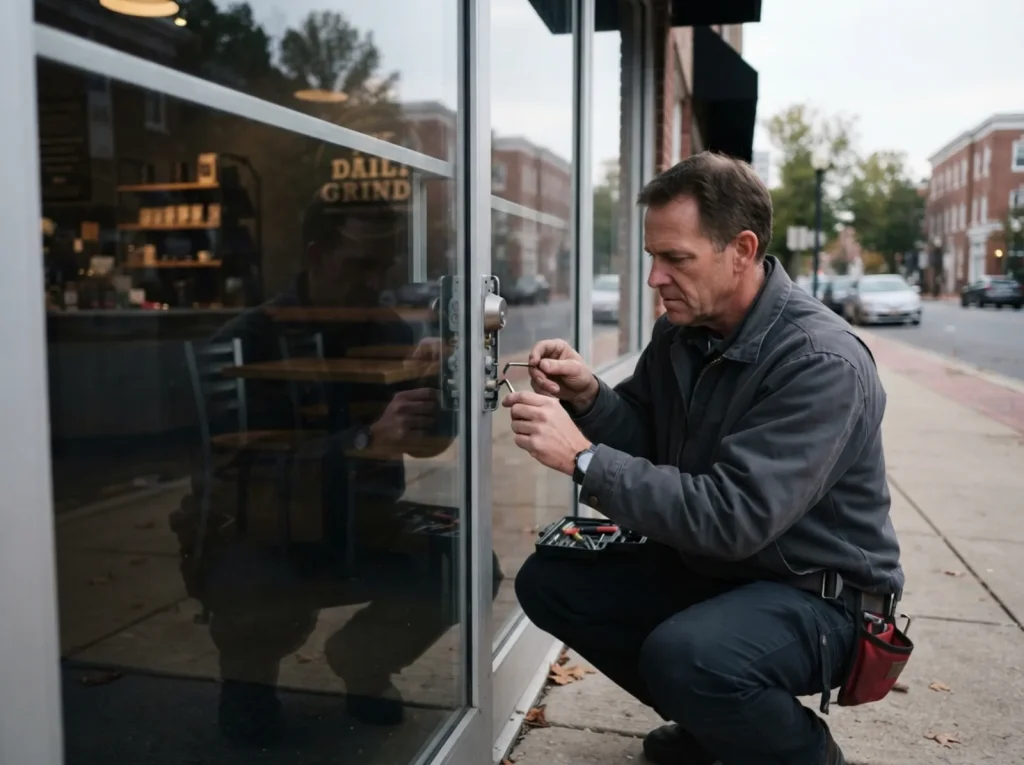
Storefronts, offices, storerooms and the doors your staff go through every day. A business lock is not just something you get past in the morning — it is who holds a key, what happens when someone leaves, and whether the shop opens on time.
Meant to be open and the door will not cooperate? Calling is faster than the form — 800-214-8901.
Five things Rockville businesses call us about
If none of these is quite it, call and describe the door — most commercial jobs turn out to be one of them.
Commercial Locks
Storefront deadbolts, mortise locks and cylinders built for a door that gets used hundreds of times a week.
Commercial locksCommercial Hardware
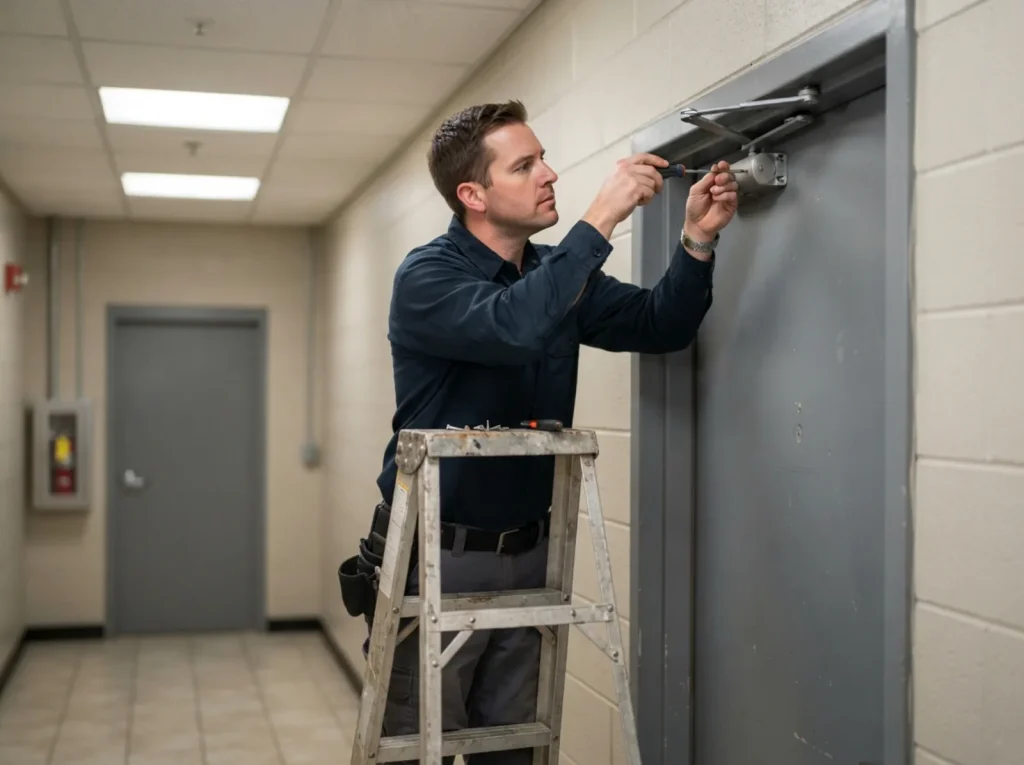
Panic bars, door closers and exit devices — the hardware that takes the daily punishment on a business door.
Commercial hardwareCommercial Lockout
A shop, office or storeroom you cannot get into, opened with as little disruption to trading as possible.
Commercial lockoutMaster Key Systems
One key that opens everything for you, and staff keys that open only the doors they should.
Master key systemsCorporate Accounts
Recurring lock work across one or more sites, handled under a single account instead of job by job.
Corporate accountsLocked out after hours?
Outside trading hours, a business lockout is handled by the emergency side of the business.
Emergency locksmithHow a commercial call goes
Four steps, and the first one is a phone call that takes about a minute.
You describe the door
A glass storefront with a mortise lock, a steel back door, an internal office — say which it is, and whether the business is open or waiting to.
We agree the price
Commercial hardware varies more than house locks do, so each job is quoted on its own — and you hear the number before anyone is sent out.
A locksmith comes out
Where trading allows, the work fits around your hours. Rekeys and hardware swaps can be booked for after close so customers never see them.
Open, repair or replace
Non-destructive entry first, and any replacement hardware chosen for a commercial door — built for the traffic it will actually get.
Business doors fail differently from house doors
A shop door is locked, unlocked, pushed and slammed more times in a week than a front door sees in a month, and it usually carries more than a lock — a closer, a panic bar, an aluminium frame that goes out of alignment. When a business door "breaks", the lock is often the innocent party.
- Heavy daily use wears commercial locks on a schedule, not by surprise — sticking is an early warning worth acting on
- A failed closer or a misaligned strike is often the real fault behind a lock that will not catch
- Storefront mortise locks, panic hardware and standard cylinders are all handled in the same visit
Key control is the real product
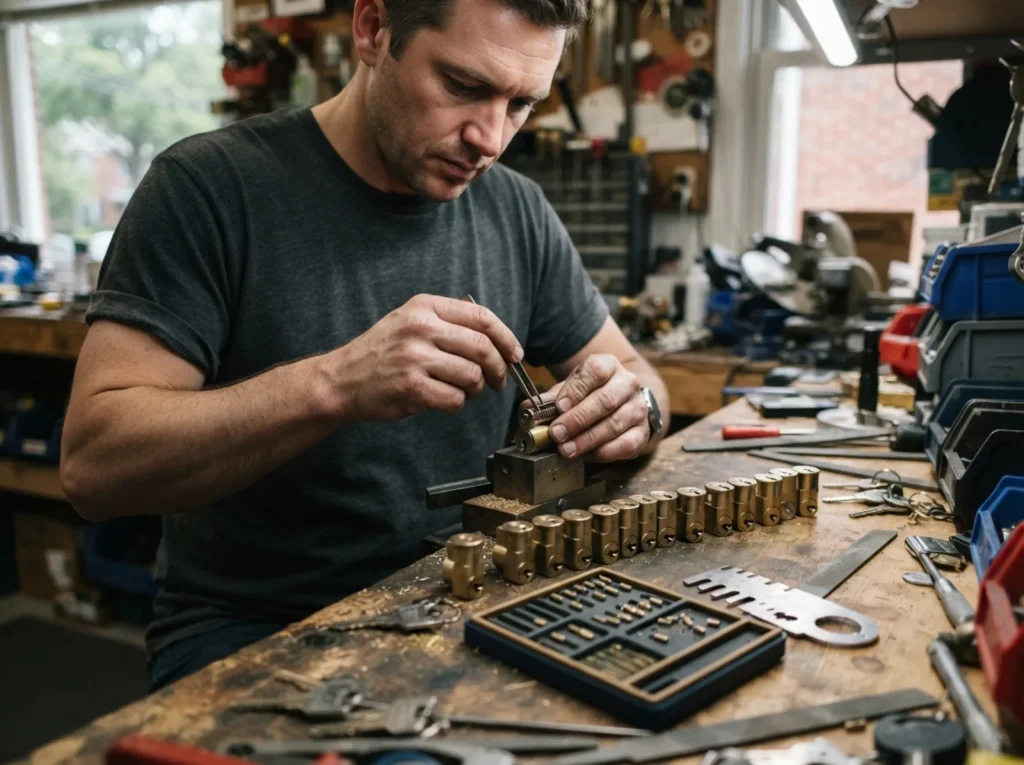
For a business, the question is rarely just "does the door lock" — it is who can open it. Staff change, keys get copied, and a ring of untracked keys quietly becomes the biggest hole in the building.
- Rekeying after a staff departure is usually quicker and cheaper than replacing the hardware
- A master key system puts levels on who opens what, instead of one ring of copies nobody can account for
- The same Rockville shop on your account every time, at 313 Congressional Lane — working with Montgomery County businesses since 2012
Commercial questions we get asked
An employee has left and still has keys. What should we do?
We open at nine and the door will not unlock. Can you get us in without wrecking it?
Do you install panic bars and door closers?
What is a master key system, and is our business big enough to need one?
Can you do the work outside our opening hours?
What does a corporate account actually get us?
Standing outside the shop you are meant to be opening?
Call and describe what is locked — that is the whole first step. If it can wait until working hours, book a visit instead and pick a time.
