
Corporate locksmith accounts in Rockville, MD
For property managers, facilities teams and businesses with more than the odd door's worth of locksmith work in a year. One number to call, named people who can call it, and a running record of what is fitted where.
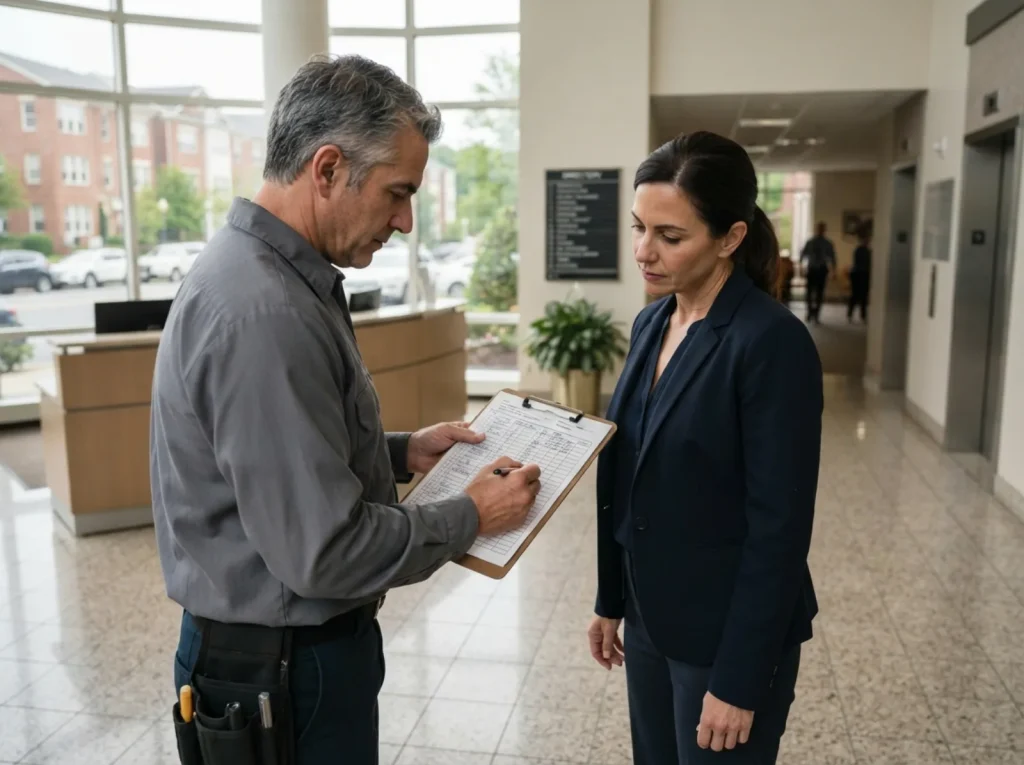
If lock work crosses your desk more than a few times a year, the expensive part is not the locksmithing — it is the overhead around it. Every job starts from zero: explain the site, explain the door, work out who is allowed to approve the work, chase a separate invoice through accounts. A corporate account exists to pay that overhead once. After that, a call from your office is a two-minute conversation, because we already know the building.
What an account actually is
It is a standing arrangement, not a subscription. Four things get agreed up front and then simply exist: a list of named people authorised to book work on your sites — so a lock never gets opened or changed on the say-so of a stranger; a record of each site's doors, hardware and keying, kept current as jobs are done; an agreed way of handling keys, including how a master system spans sites if you run one; and invoicing arranged the way your accounts department wants it, rather than a loose receipt per callout. It suits property managers with tenanted units, businesses across several premises, and single sites — schools, medical suites, churches — where doors and keyholders outnumber the people managing them.
How an account gets set up
- You get in touch and describe the operation — how many sites, what kind of doors, roughly how often lock work comes up.
- We walk the sites and record what is actually on the doors. This survey becomes the baseline record, and it usually surfaces a few things worth knowing about anyway.
- Together we set the authoriser list: who can book work, and who signs off on key or lock changes.
- Billing is set up with your accounts contact, in whatever rhythm suits them.
- From then on, work is booked with a phone call or an email from a named authoriser — and each completed job updates the record.
What the account changes on the ground
- The van arrives loaded for your hardware, because the record says what is on the door before anyone sets off
- Keying stays coherent across sites and years, instead of drifting one emergency at a time
- Lockouts and failures are handled against the account — no fresh negotiation with a stranger at a bad moment
- One invoice trail, in your format, instead of a shoebox of callout receipts
When to call straight away
An account does not queue emergencies behind paperwork. A tenant locked out, a shutter that will not close, a door standing open at a site nobody is at — those go straight through, day or night, via the 24/7 emergency business line, and get logged to the account afterwards. The authoriser list is there to stop strangers ordering work, not to slow your own people down at midnight.
After the account is running
The record quietly becomes the most useful thing about the arrangement. Staff change: the record says which cylinders their keys fit, so rekeying is surgical instead of building-wide. A master key system stays true to its chart because every change goes through one place. And patterns show up — the same door failing twice points at a hardware problem worth fixing properly rather than a lock worth replacing again.
Other things we handle on the same visit
One call usually covers more than one of these.
Tell us which door it is
One phone call, about a minute. You will know what the job involves and what it costs before a locksmith sets off.