
Commercial locks in Rockville, MD
A shop door gets opened and slammed more times in a week than a house door does in a year. The locks that survive that are a different class of hardware, and choosing the right class for each door is most of this job.
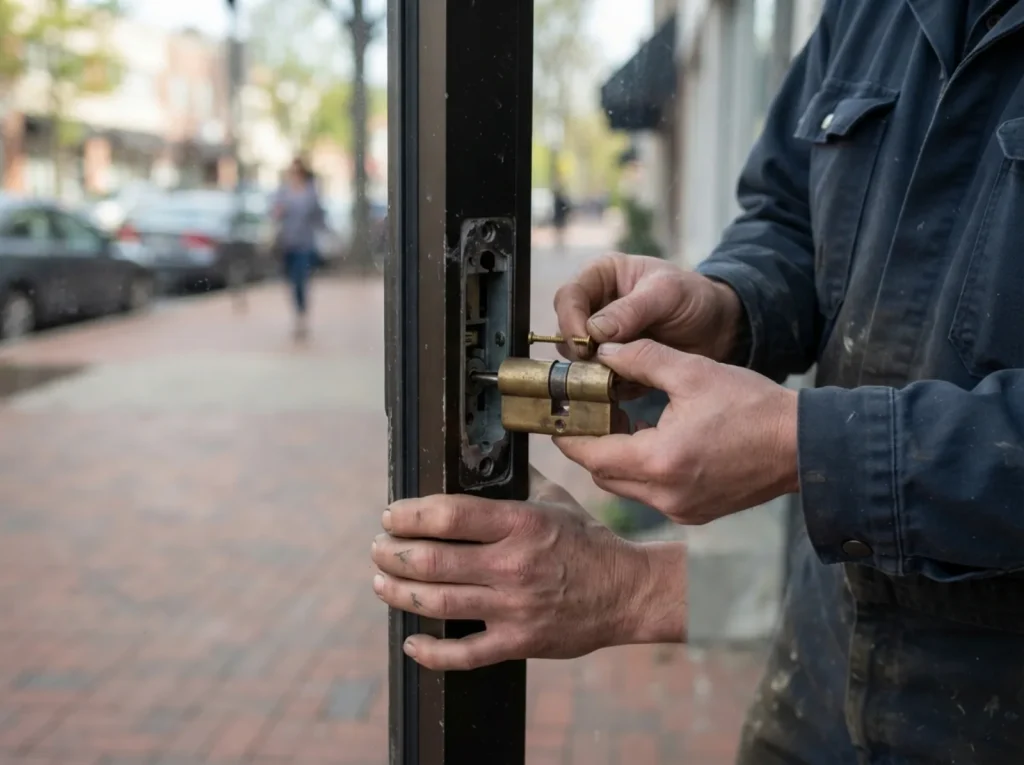
Residential locks on a commercial door is the false economy we get called to undo most often. The hardware-store deadbolt that would last decades on a house gives up in a year on a door that cycles two hundred times a day — and it usually gives up at closing time. Commercial lock work starts from the traffic each door actually takes, then picks hardware built for it.
What commercial lock work covers
Mortise locks for main entrances, cylindrical lever sets for offices and back-of-house, deadbolts and deadlatches for storerooms, and the narrow-stile locks that aluminium-and-glass storefront doors take — a format all of their own. It extends to the small stuff a business runs on too: cabinet, desk and mailbox locks, padlocks for gates and shutters, and standalone keypad locks for doors that too many people need through to be handing out keys.
Just as much of the work is keying as hardware: swapping cylinders when staff leave, keying a new lock into the suite you already have, and setting doors up keyed alike so the owner is not carrying a fistful of keys.
How the visit goes
- You describe the business and the doors — or for anything past a single door, we walk the site, because the door tells us things the phone cannot.
- Each door gets a recommendation matched to its traffic and its job: the entrance and the stockroom do not need the same lock, and paying for the heavier one everywhere is wasted money.
- We agree the list and the cost before any hardware is ordered or fitted.
- Locks are fitted and keyed the way the business needs — alike, separate, or into a master key system if levels of access matter.
- Every lock is tested, and you get the keys plus a written note of what is fitted where, which makes every future call about this building faster.
What we bring to commercial lock work
- Commercial-grade cylinders, lever sets and deadbolts, duty-rated for high-traffic doors
- Narrow-stile lock cases and cams for aluminium storefront doors
- Keying tools to pin a new lock into an existing key suite on site
- Blanks and a cutter, so every keyholder leaves with a working key the same day
When to call straight away
A door that will not lock at closing time is the call that cannot wait until morning — out of hours it goes to the emergency business line, which runs 24/7. A departed employee who kept keys is nearly as urgent: until those cylinders are rekeyed, that key still works, and rekeying is a same-day job, not a project.
After the locks are in
Keep the fitted-hardware note somewhere it can be found — it turns "some silver lock, maybe?" into a part number when something needs attention later. As the business grows, growing the keying with it matters more than adding locks: that is where master keying earns its keep. And remember the lock is only one part on the door — closers, hinges and exit hardware are their own subject, covered under commercial hardware.
Other things we handle on the same visit
One call usually covers more than one of these.
Tell us which door it is
One phone call, about a minute. You will know what the job involves and what it costs before a locksmith sets off.