
Lock repair in Rockville, MD
A key that needs jiggling, a latch that only catches when you lift the handle, a bolt that grinds halfway and stops. Locks give warnings before they fail, and repairing at the warning stage is far cheaper than opening a failed lock later.
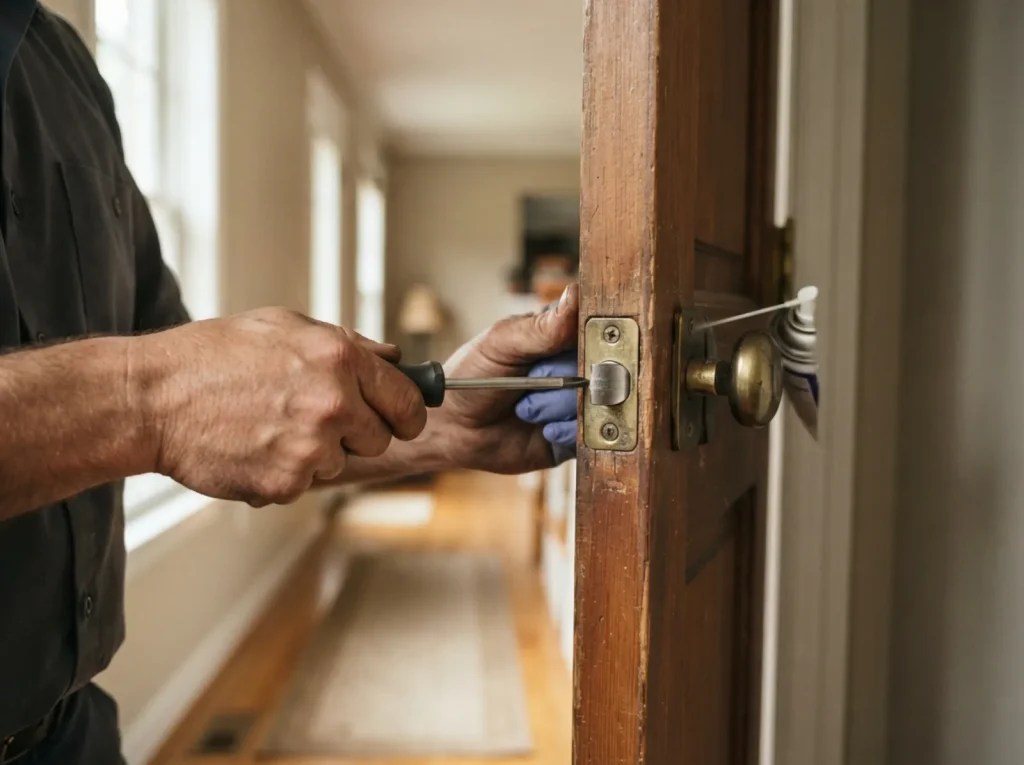
Here is the thing nobody tells you about broken locks: a good share of them are not broken at all. The house settles, the door drops a couple of millimetres on its hinges, and suddenly the bolt is scraping the strike plate. People replace the lock, the new one does the same thing, and the actual fault was never in the lock. Diagnosing which one you have is most of this job.
What a lock repair covers
Cylinders that have gone stiff or seized, keys that need working back and forth, latches out of line with the strike, handles and thumbturns that spin without doing anything, deadbolts that will not throw fully, and internal parts — springs, followers, tailpieces — that have worn or snapped. It also covers the door-side causes: dropped hinges, swollen doors, strike plates that need moving. And if a key has already snapped off in the barrel, extracting it and servicing the cylinder is the same visit.
How the visit goes
- You describe the symptom — what the lock does, when it started, and whether it is worse in some weather than others. That last one usually points at the door, not the lock.
- At the door, we work out where the fault actually lives: cylinder, latch, or the door and frame around them.
- Lock faults get the lock stripped, cleaned, and worn parts replaced. Door faults get hinges tightened or packed and the strike realigned.
- If the lock turns out to be beyond sensible repair, you hear that plainly, with what a replacement involves — not a replacement sold to you by default.
- The door is cycled and locked from both sides with your own keys before we call it done.
What we bring to a repair
- Springs, latches, tailpieces and cylinders for the common residential lock brands
- Proper lock lubricants — graphite and PTFE, not the oily sprays that gum a cylinder up worse
- Hinge hardware, packers and long screws for doors that have dropped
- Extraction tools for keys that have already snapped inside
When to call straight away
A key that has started to visibly bend, or a lock that needs more force every week, is a lock about to fail — and it will fail locked, usually when you are on the wrong side of it. Getting it repaired is a booked visit; getting it opened after it seizes is a house lockout. One of those is cheaper and happens at a time you chose.
After the repair
Ask what caused the wear while the locksmith is still there — sometimes it is age, sometimes it is a door problem that will keep chewing hardware until it is dealt with. If the repair showed the lock is on borrowed time, a new lock fitted properly beats a second repair. And if the worry was ever about who has keys rather than how the lock turns, that is a rekey, which can be done in the same visit.
Other things we handle on the same visit
One call usually covers more than one of these.
Tell us which door it is
One phone call, about a minute. You will know what the job involves and what it costs before a locksmith sets off.