
Safe opening in Rockville, MD
A forgotten combination, a keypad that died with the batteries, or a safe that came with the house and no code. Most safes can be opened without destroying them — but the order you try things in matters.
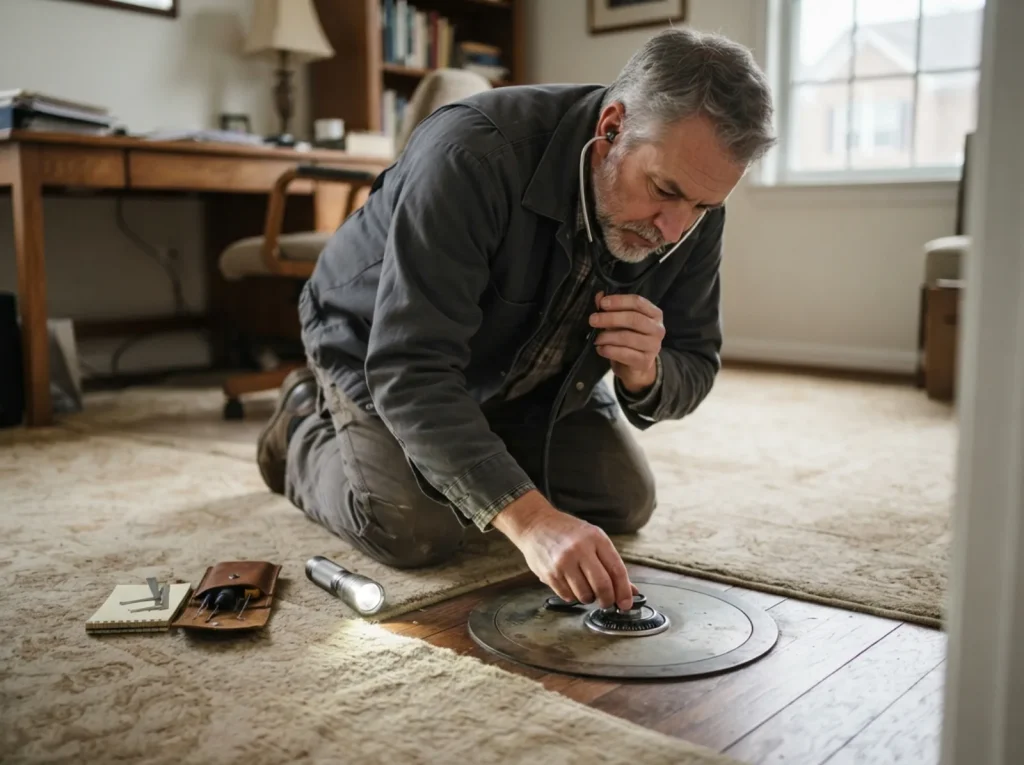
A safe is the one lock in the house you should not experiment on. A front-door cylinder forgives a bit of fiddling; a safe answers wrong guesses with lockout penalties, and a drill in the wrong place turns a working safe into scrap with your things inside it. The whole craft of safe opening is getting in by the gentlest method that will work — so the safe, and everything in it, comes out of the job intact.
What a safe opening covers
Home and small office safes with dial combinations, electronic keypads or keys: lost and forgotten combinations, dead or corrupted keypads, flat batteries that took the code with them, bolt work that has jammed, keys lost for key-locked safes, and the second-hand or inherited safe nobody ever had the code for. Once open, the same visit covers putting the safe back into service — new code, new batteries, repaired lock — or opening it for disposal if its working days are over.
How the visit goes
- You tell us what you can about the safe: brand and model if visible, dial or keypad, and what happened — forgotten code, dead keypad, or a safe that arrived locked.
- From that we can usually say which method it will take and what it will cost, before anyone comes out.
- Gentle methods come first: override and recovery procedures, fresh batteries applied properly, dial manipulation where the lock allows it.
- Drilling is the last resort, not the first move — and if it comes to that, you hear about it beforehand, and the hole goes where it can be repaired afterwards.
- Before we leave, the safe is working again under a combination you set, or opened up for you to empty and retire.
What we bring to a safe opening
- Reset and change tools for the common electronic safe locks, plus fresh batteries and replacement keypads
- Manipulation equipment for mechanical dial locks
- A drilling rig and hardened bits for the last-resort route, with repair plugs to make the safe whole again
- Replacement lock bodies, so a failed lock can be swapped and the safe stay in service
When to call straight away
If what is inside is needed now — medication, passports before a flight, documents on a deadline — say so on the phone; out of hours that is a job for the emergency safe team, which runs 24/7. A keypad that chirped a low-battery warning and then went silent is also worth a prompt call, before repeated attempts push the lock into a penalty lockout.
After the safe is open
Set your own code and store the recovery details somewhere that is not inside the safe — that one loop catches a surprising number of people. If the lock failed rather than the memory, have the lock body replaced instead of trusting a component that has already let you down once. And while the door is open, it is a good moment to check the bolt work and hinges, the parts that jam silently over years — the same wear-and-warning logic as any lock repair.
Other things we handle on the same visit
One call usually covers more than one of these.
Tell us which door it is
One phone call, about a minute. You will know what the job involves and what it costs before a locksmith sets off.