
Commercial door hardware in Rockville, MD
Closers, exit devices, hinges, plates and thresholds — the parts that do the work every time the door moves, not just when it locks. When a commercial door slams, drags or stops latching, this is where the fault usually lives.
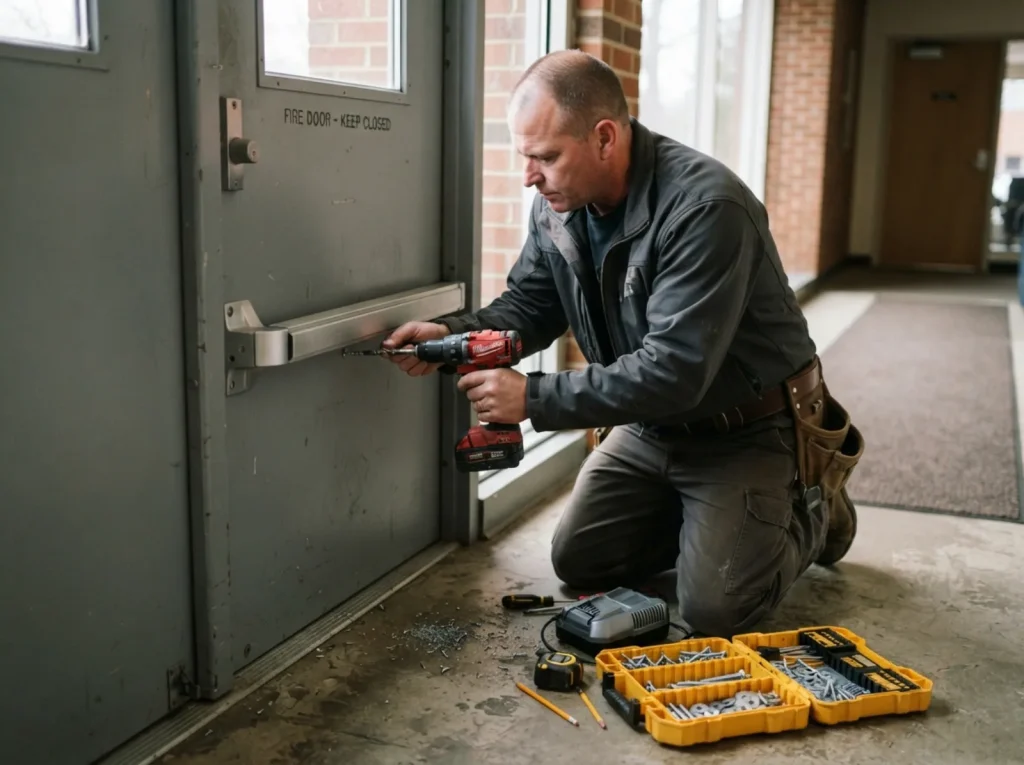
When a commercial door misbehaves, the lock gets the blame — it is the part everyone touches. But a door that has to be shouldered shut, or bangs like a gunshot behind every customer, is nearly always a hardware problem: a closer out of adjustment, hinges worn oval, a threshold the door now scrapes across. Fix the hardware and the "broken lock" very often turns out to have been fine all along.
What commercial hardware work covers
Door closers — adjusting the ones that slam or that seniors have to fight open, and replacing the ones past adjusting. Panic bars and exit devices on escape-route doors. Hinges: ball-bearing sets for heavy doors, continuous hinges for doors that have chewed through everything else, and pivots on storefront doors. Then the supporting cast — kick plates, push and pull hardware, thresholds, sweeps and weatherstripping — which decides how the door feels to use and how long the rest of the hardware lasts.
How the visit goes
- You describe what the door is doing — slamming, dragging, standing open, refusing to latch — and roughly how busy it is.
- On site, we watch the door through full cycles. Where it hesitates, scrapes or bangs tells us which component is failing before anything is unscrewed.
- Adjustment comes before replacement: a closer has valves and spring settings most people never touch, and many "dead" closers are just badly set.
- What is genuinely worn gets replaced with hardware rated for that door's weight and traffic, into fixings that will hold — frames chewed out by the old hardware get repaired, not reused as-is.
- The door is run through its full swing, latch and lock until it closes itself properly from any position, every time.
What we bring to hardware work
- Surface-mounted closers in the common sizes, and the spanners to adjust the one you already have
- Exit devices and the internal parts that fail on them — latches, rods and end caps
- Heavy-duty and continuous hinges, with the oversized fixings worn frames need
- Kick plates, thresholds and sweeps, so the whole door edge can be sorted in one visit
When to call straight away
Two faults should never sit on a to-do list. An exit device that does not open on a firm push is an escape-route failure — that is a today call, not a Friday one. And a street door that no longer closes or latches on its own is a security hole every minute the building is unattended; out of hours, the emergency door team handles exactly that.
After the hardware is right
A door that closes sweetly takes the strain off everything else, so expect the locks to last longer from here. If the lock already took years of abuse from a dragging door, have it looked at now — that is commercial lock work, and catching it early is the cheap version. For buildings with many doors, a periodic walk-through with a screwdriver and a closer spanner prevents most of what this page describes; that is the sort of standing arrangement a corporate account exists for.
Other things we handle on the same visit
One call usually covers more than one of these.
Tell us which door it is
One phone call, about a minute. You will know what the job involves and what it costs before a locksmith sets off.