One Key, Eleven Doors: How Master Keying Actually Works
 A1 Super Locksmith Services
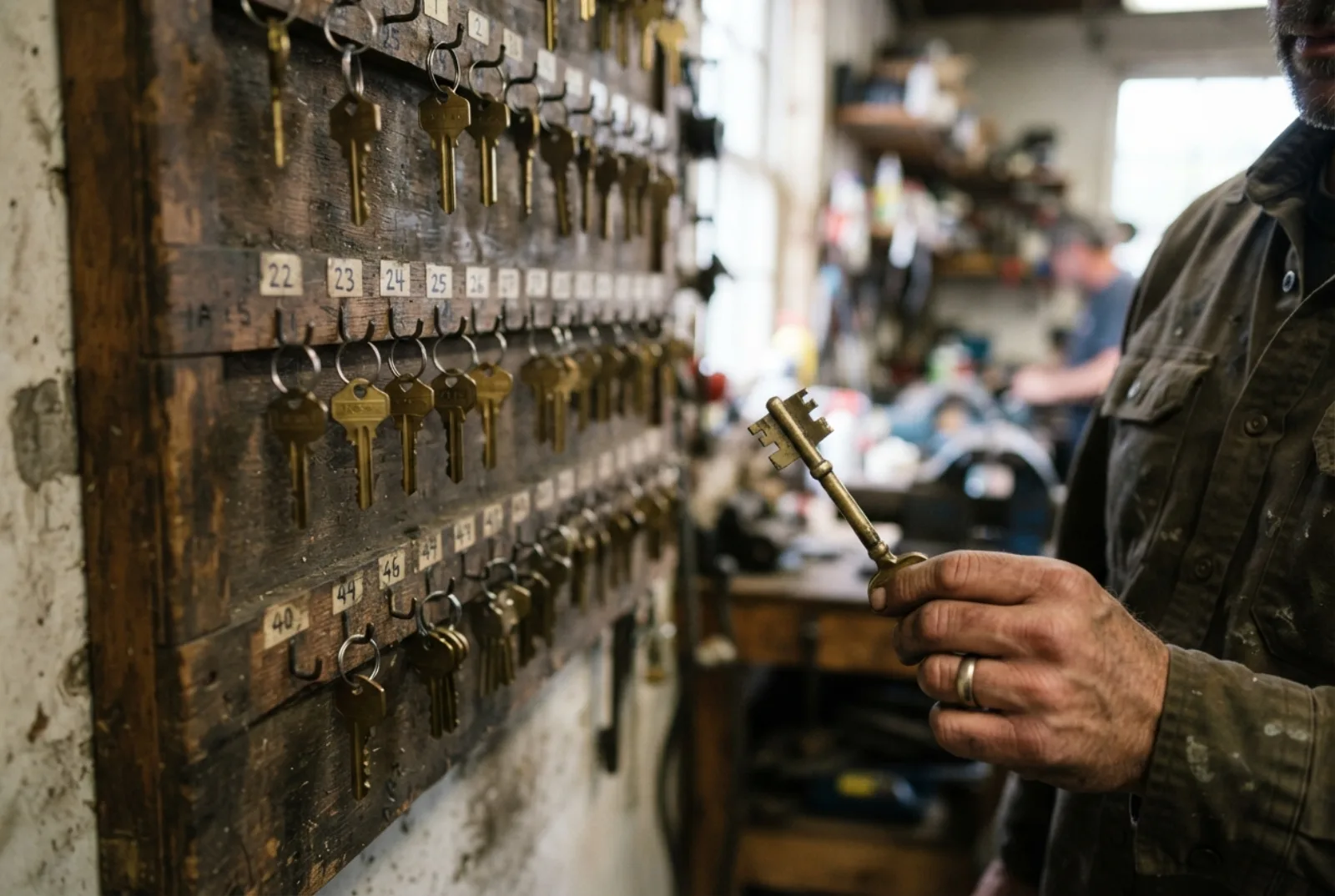
Every small business gets there eventually. The manager carries eleven keys. The stockroom key has gone missing twice. Somebody has a key to the front door who left in March.
A master key system for a small business fixes that, and it is much less exotic than it sounds. It is not electronics and it is not a subscription. It is the same brass pins as an ordinary lock, arranged so that more than one key height works.
How one lock can accept two different keys
Inside a cylinder, a stack of pins has to line up at a single shear line before it turns. A normal lock has one pin height per stack, so exactly one key works.
Master keying adds a second pin — a small spacer — into some of those stacks. That creates a second valid height in that position. So the cylinder now turns for two different cuts: the key that belongs to that door, and the master.
That is the whole idea. Everything else is administration.

The hierarchy, in the order most businesses need it
- Change keys. One door each. The bulk of what you hand out. The person who opens the shop does not need the server cupboard.
- Sub-masters. One key for a group — all front-of-house, all offices, all storage. This is where a shift supervisor sits.
- The master. Opens everything in the system. Owner and manager, and nobody else.
- A control key, on interchangeable-core systems: pulls the core out of a lock so it can be swapped in seconds without unscrewing anything.
Most small businesses need two levels and think they need four. Start smaller than feels right — you can grow a system that was designed to grow, and you cannot easily simplify one that was overbuilt.
What it is good for, and what it is not
Good for: giving each person exactly the access their job needs; ending the key ring; taking one door out of circulation without touching the rest; and — the one that pays for itself — making a departing employee’s key a small problem instead of a whole-building rekey.
Not good for: knowing who went where and when. A mechanical key leaves no record. If you need an audit trail — controlled stock, patient records, cash handling — that is an access control conversation, and the honest answer is often a hybrid: keys on the doors that need keys, credentials on the two or three that need logging.
The mistake that undoes the whole thing
Not recording who holds which key.
A master key system is only as good as the list. Without a list, an employee leaves, nobody is certain which key they had, and the safe assumption becomes rekeying everything — which is the exact cost the system was bought to avoid.
The fix is a single sheet: key number, holder, date issued, date returned, signature. On paper in a drawer is fine. Also worth doing on day one:
- Stamp “DO NOT DUPLICATE” and mean it. On its own it is only a request, which is why the next point matters more.
- Use a restricted keyway if the system is worth protecting. The blanks are not sold to the public, so copies come back through the locksmith who holds your records — that is what actually stops casual duplication.
- Keep one master off site, not in the building it opens.
- Count the keys annually. Ten minutes, once a year, and it is the difference between a system and a hope.
Setting up a master key system for a small business
The design is the job; the pinning is quick. A visit normally goes: walk the premises and list every door, group the doors by who needs them, decide the levels, check what hardware is already there, then pin and cut.
The hardware question decides most of the cost. If your cylinders are a consistent brand and keyway, many can be re-pinned in place. If the building has accumulated four brands over fifteen years — the usual state of a shopfront on Rockville Pike that has changed hands twice — some doors will need new cylinders to join the system.
One practical note for anyone with a commercial exit door: whatever goes on it must not compromise getting out. Egress hardware is a life safety matter and is governed by the fire code, not by preference. Montgomery County Fire and Rescue Service is the authority on that locally, and no key system should ever put a lock between people and the way out.
Our master key systems page covers the service, and commercial hardware covers the doors themselves.

Master Key System for a Small Business: The Short Version
A master key system for a small business works by adding a second valid pin height inside each cylinder, so a door opens for both its own key and the master. Build two levels before four, keep a written record of who holds which key, and use a restricted keyway if copying matters. It cannot tell you who went where — that is access control. And nothing in the system may ever interfere with getting out through a fire exit.
Frequently Asked Questions
Q: Does master keying make each lock less secure?
A: Slightly, and it is worth understanding rather than glossing over. Extra pin heights mean more combinations that will turn a given cylinder. For an ordinary shop or office the trade is well worth it; for a high-security door — a safe room, a controlled store — the usual answer is to leave that one door out of the system entirely.
Q: Can my existing locks be master keyed, or do I need new ones?
A: Often the existing ones are fine, if they share a brand and keyway and are in decent condition. Mixed hardware is the common obstacle in older buildings, and in that case some cylinders get replaced so everything can sit on one system. That is the first thing to check on a site visit, because it decides the cost.
Q: An employee left and did not return their key. What now?
A: With a system and a key register, you rekey the doors that key opened — often just a few. Without a register you cannot be certain what it opened, and the safe answer becomes the whole building. That single sheet of paper is what makes the difference.
Q: How do I stop people copying keys?
A: “Do not duplicate” stamping is a request, not a control. A restricted keyway is the real answer: the blanks are not sold on the open market, so duplicates come through the locksmith holding your authorisation list. It costs a little more per key and it is the reason to have a system at all.
If you are carrying too many keys, call 800-214-8901 and say how many doors and roughly how many people need access.