Half the Key Turned. The Other Half Is Still in the Lock.
 A1 Super Locksmith Services
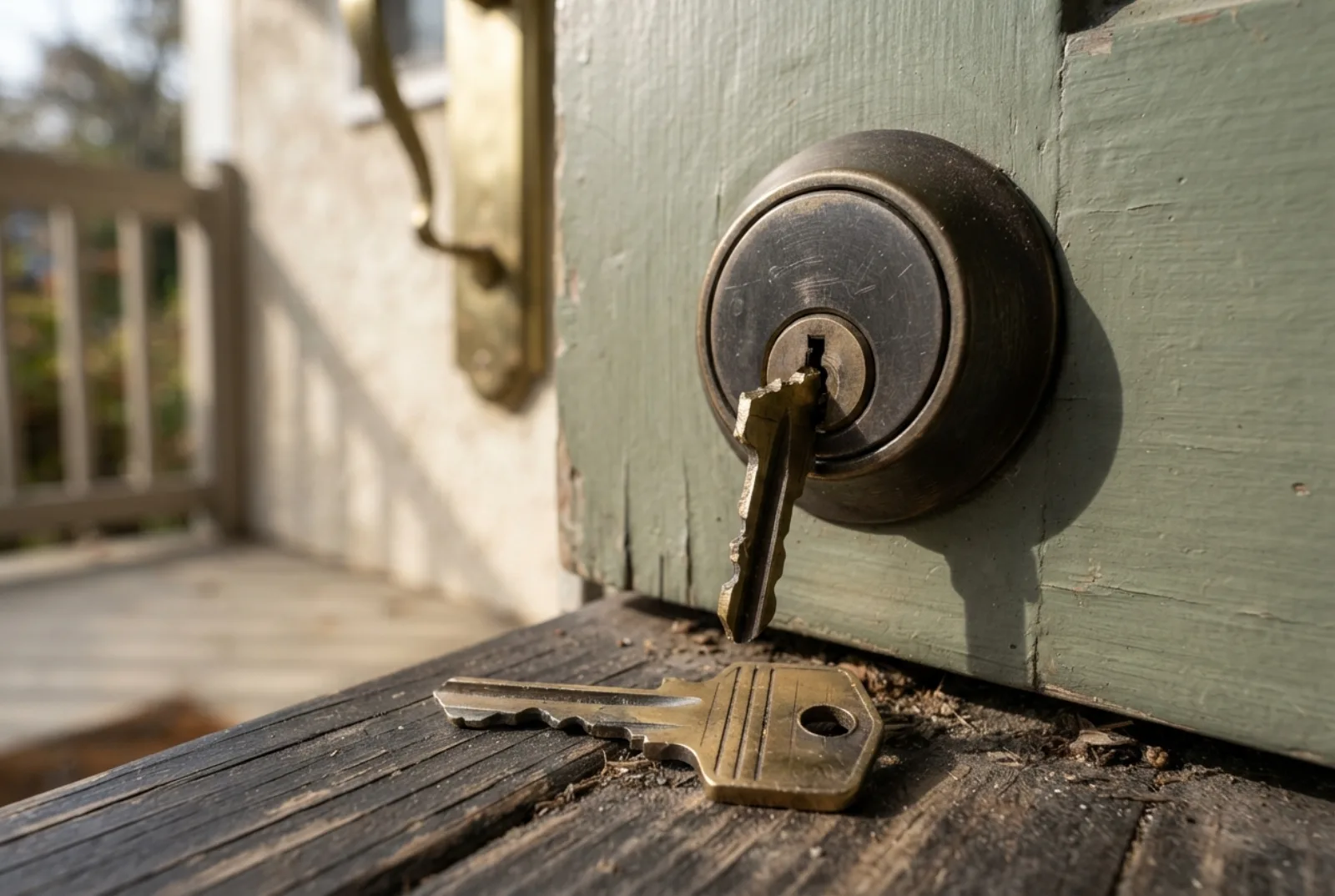
It does not snap without warning. It snaps after months of warning that nobody reads as warning.
A broken key in the lock is one of the most recoverable problems in this trade — and one of the most commonly made much worse in the first five minutes, by a well-meaning person with a pair of needle-nose pliers and a superglue idea they read online.
Why keys break, and why it is almost never the key’s fault
Brass is soft. That is deliberate: the key is meant to be the part that fails, because it is the cheap part. A key breaks when it is asked to do more work than a key should, and that extra work comes from somewhere:
- A stiff or dry cylinder. Every turn takes a little more force until one turn takes more than the brass can give.
- A door that has dropped. Very common in the older housing around Lincoln Park, Twinbrook and Takoma Park. The bolt no longer lines up with the strike, so you lift the door with the handle while turning the key. The key is now a lever, and levers snap.
- A worn copy of a copy. Each generation of duplicate loses a little definition. By the third or fourth, the cuts are shallow enough that the key rides the pins instead of setting them.
- Cold. Brass gets more brittle, grease gets thicker. February is a good month for this trade for a reason.
The important part: if a key broke, the lock was already telling you something. Extracting the key without fixing what stressed it means the next key breaks too.
What to do, in order
- Stop turning things. If part of the key is in the cylinder and the cylinder is part-turned, leave it. Forcing it now is what turns a $75 job into a lock replacement.
- Look at what is sticking out. If a genuine few millimetres of the blade is proud of the face and the cylinder is straight, a firm, steady pull with fine pliers is reasonable. Straight out, no wiggling, no twisting. One attempt.
- If nothing is proud, stop. This is the point where people start improvising and where the damage happens.
- Do not use glue. Ever. Superglue on a broken key end is the single most reliable way to convert a ten-minute extraction into a cylinder replacement, because the glue bonds the fragment to the pins.
- Do not drill it. Drilling is a locksmith’s last resort, not a first move, and it destroys a lock that was very likely fine.
- Do not spray WD-40 in it. It is a water displacer, not a lock lubricant. It washes out what grease is left and attracts dust, and you will be back. Graphite or a proper PTFE lock lubricant is what belongs in a cylinder.
How a broken key in the lock actually comes out
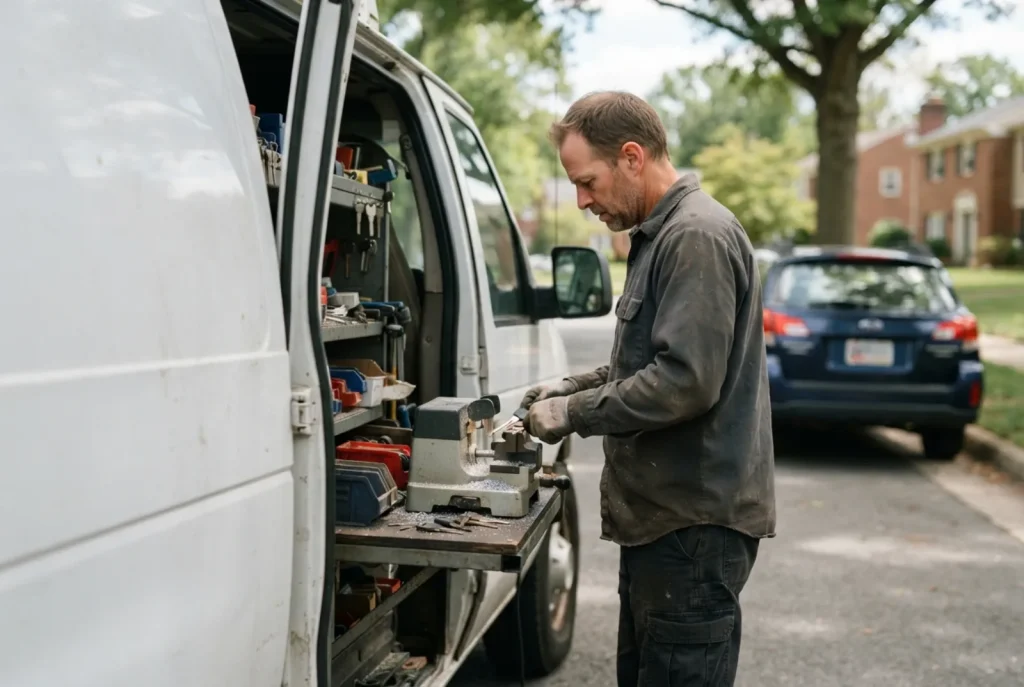
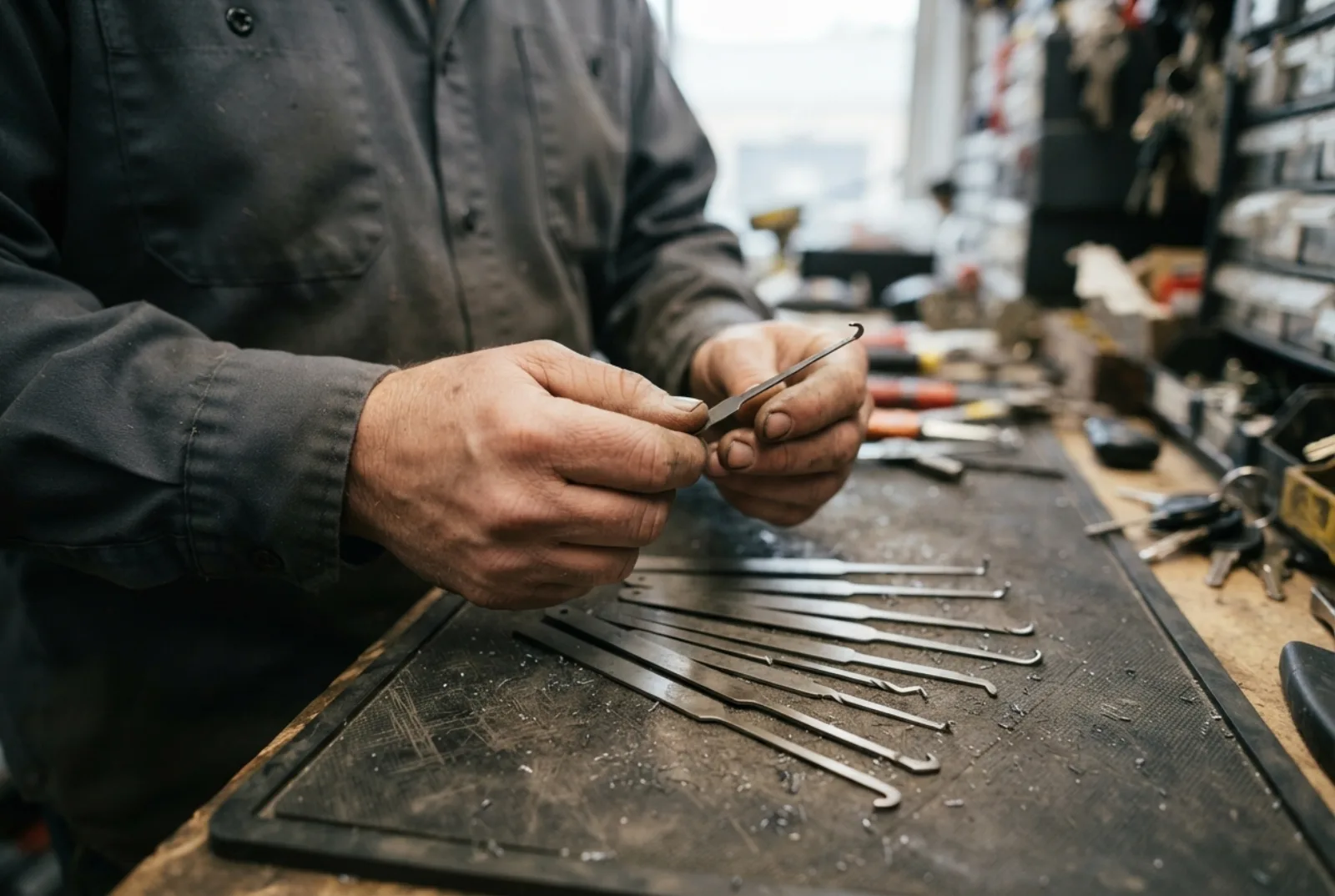
The tools are unglamorous: thin extractor blades with a barb or a hook, designed to slide down the keyway alongside the fragment, catch the cuts and draw it back out. Two of them from either side of the blade, sometimes. A good extraction takes minutes and the lock keeps working afterwards.
The reason it needs the right tool is geometry. The keyway is a narrow, warded slot with spring-loaded pins pressing down on the fragment from above. Anything that pushes rather than pulls drives the fragment deeper, past the point where any blade can reach it — and then the cylinder does have to come out.
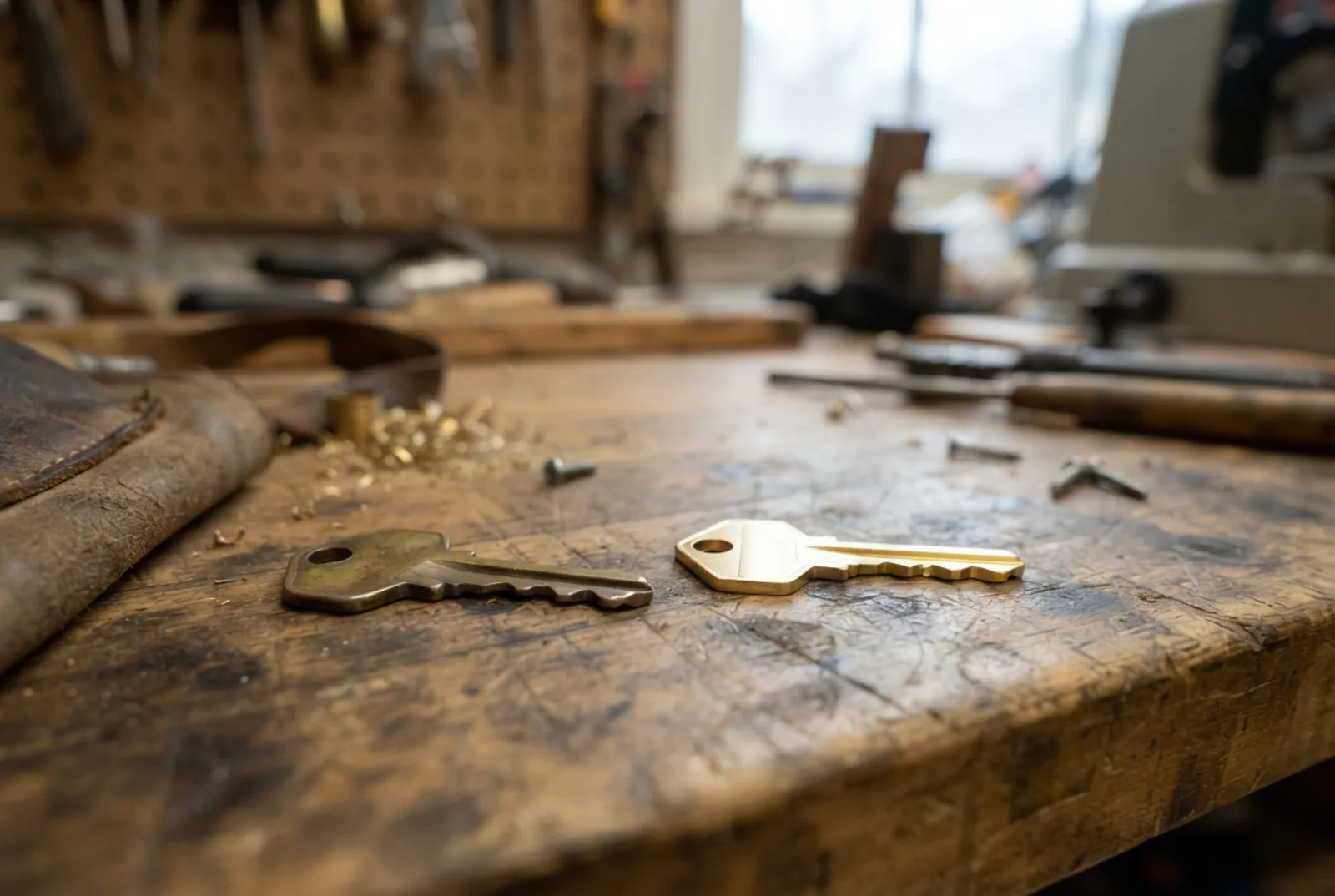
Afterwards, the fix is the other half of the job: lubricate the cylinder properly, check the door alignment and the strike plate, and cut you a fresh key from the code or from the lock rather than copying the surviving half of a worn key. Copying the broken key just restarts the clock.
What extraction costs
Published 2026 national ranges, from the national locksmith pricing survey — not a quote for your door, which we give on the phone:
- Broken key extraction: $50–$150
- Standard key duplication: $1.50–$10
- Ignition repair or replacement: $125–$275
- Service call fee: $50–$130
Compare the first line with a lock replacement, and then with the cost of a cylinder that has been drilled or glued. The gap between them is almost entirely decided in the first five minutes.
If it broke in the ignition
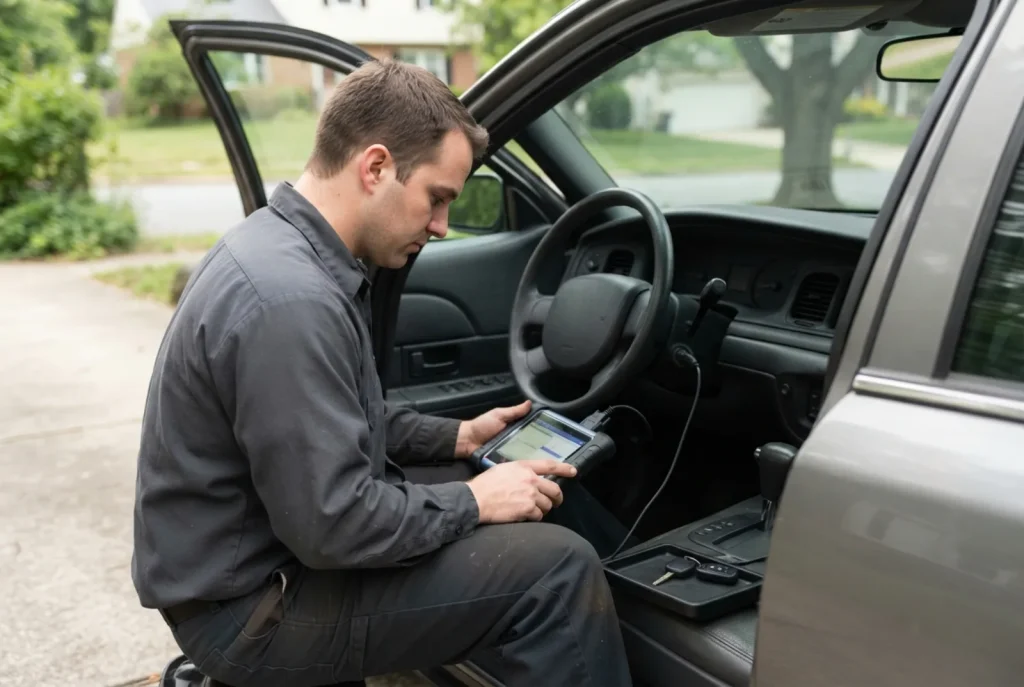
Same principle, higher stakes, and one extra rule: do not try to start the car. The ignition cylinder is more delicate than a door cylinder and it is attached to the steering lock, so a fragment forced deeper can leave the wheel locked as well. Ring rather than experiment — our key extraction page covers the automotive side, and car key repair covers the key that broke.
Broken Key in the Lock: The Short Version
A broken key in the lock is usually a short job if nothing else is attempted first. Stop turning, look for a few millimetres of blade to grip and pull straight out once, and if there is nothing to grip, leave it alone. No glue, no drilling, no WD-40. Then fix the cause — a dry cylinder, a dropped door or a worn copy — and take a freshly cut key rather than a copy of the one that just failed.
Frequently Asked Questions
Q: Is the lock ruined?
A: Almost never, if nothing has been forced, glued or drilled. In most extractions the cylinder is fine afterwards and only needs cleaning and lubricating. The locks that end up replaced are usually the ones that had a rescue attempt first.
Q: Can I just glue the two halves together to get one more use out of it?
A: No. It is the worst option on the list. The joint has no strength, it fails inside the keyway, and now the fragment is bonded to the pins. A ten-minute extraction turns into replacing the cylinder.
Q: Can you cut a new key if the old one is in two pieces?
A: Usually yes, and often better than a copy. Where possible we cut from the lock or from the key code rather than duplicating a worn key, so the new key is to the original specification rather than to the shape of the one that just broke.
Q: Why did it break in the cold?
A: Two reasons at once. Brass is more brittle at low temperatures, and the grease inside the cylinder thickens, so the same turn takes more force. If a lock is stiff in January it is telling you it is dry, and lubricating it is a lot cheaper than the alternative.
If half a key is standing in your door right now, call 800-214-8901 before you try anything else.