You Just Bought a House in Montgomery County. Who Else Has a Key?
 A1 Super Locksmith Services
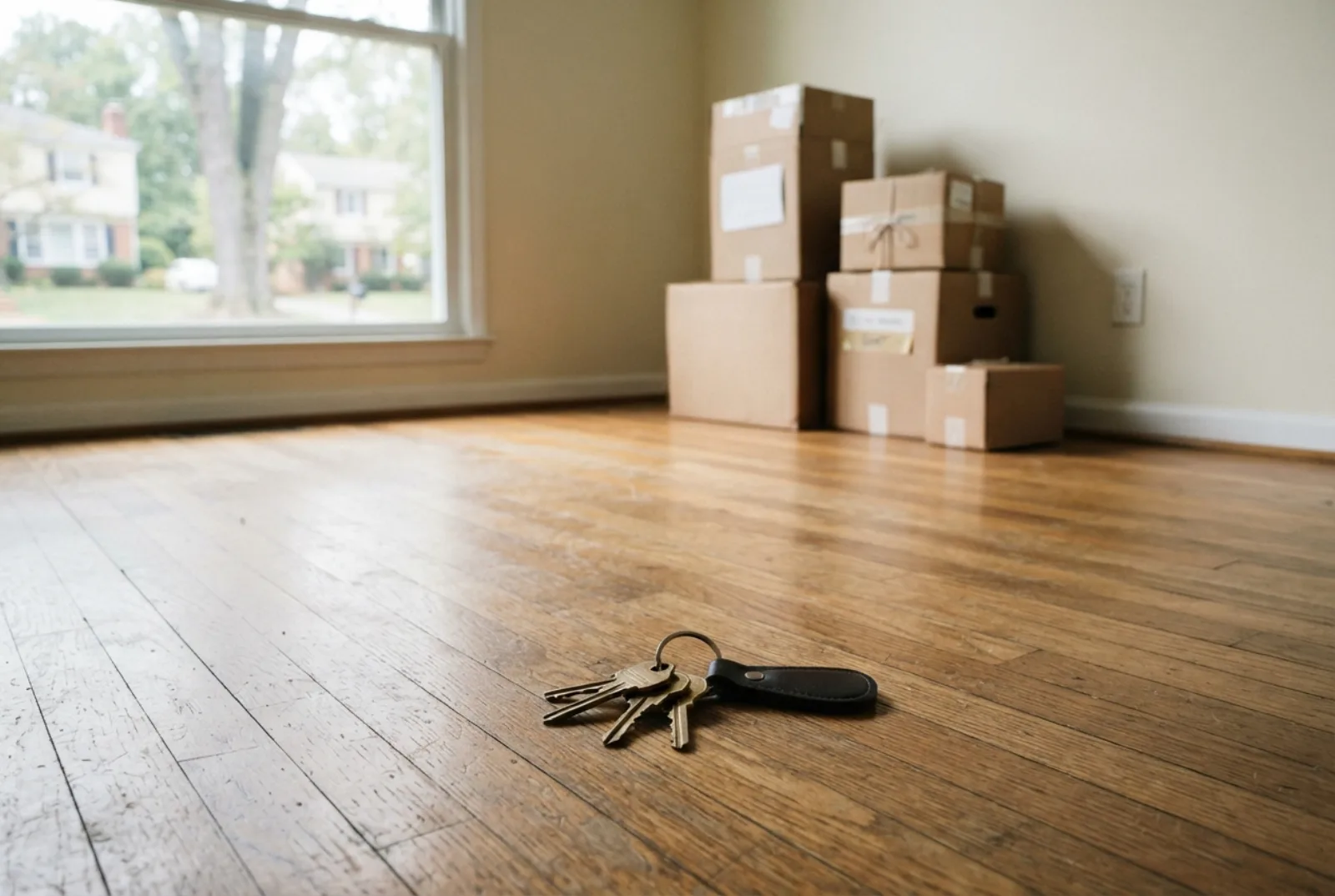
Closing day comes with a small envelope of keys. Nobody can tell you how many others exist.
The previous owners had copies. So, probably, did a cleaner, a dog walker, a contractor who did the basement in 2019, a neighbour who watered plants, and whoever the owners before them handed a spare to. This is the honest reason to change the locks when you move in: not because anyone is coming for you, but because the number of keys in circulation is genuinely unknown, and it stays unknown forever unless you close it.
The keys you are not thinking about
People do the front door and stop. Walk the property instead and count every lock:
- The back and side doors. Often a different brand, often older than the front, and often the one a previous owner left in worse condition.
- The door from the garage into the house. The most-forgotten lock in any house, and the one that matters most, because a garage code is shared far more casually than a key.
- The garage keypad itself. Change the code. It costs nothing.
- The basement walk-out. Very common in this county’s split-levels and ramblers, and frequently on its original hardware.
- The shed and the gate. Low stakes, but a shed usually holds the ladder that reaches your upstairs windows.
- Any lockbox still on the property. Agents forget them. If one is hanging on your railing, take it off.
Rekey the lot, replace what deserves it
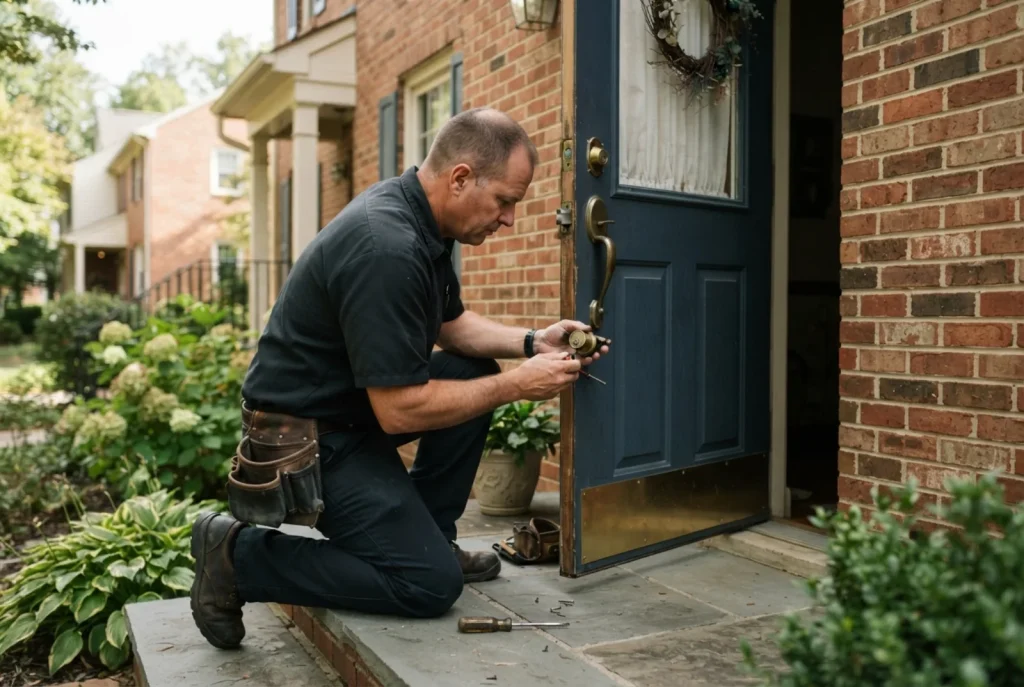
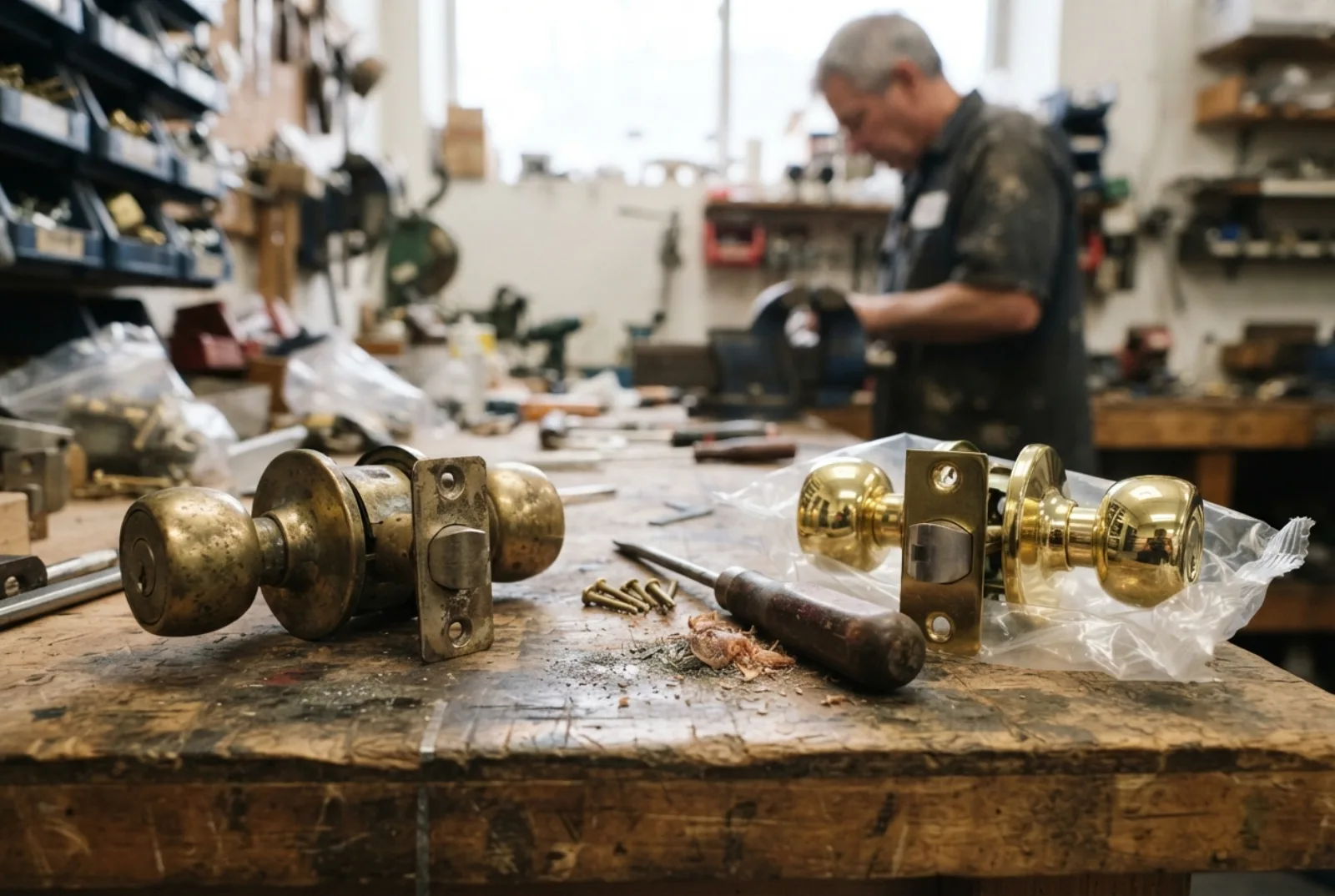
You do not usually need new hardware on every door. Rekeying swaps the pins inside the existing cylinder, so every old key stops working and the door keeps the lock it already had. It is the cheaper half of the job by a wide margin.
Replace, rather than rekey, where the hardware itself is the problem: a bolt that does not throw fully, a key that needs a wiggle, anything visibly corroded, anything that took a hit during an attempted break-in years ago, and any door where you have already decided you want a keypad. The rest gets rekeyed.
The other thing worth asking for in the same visit is one key for every door. Most people arrive with four keys for four doors because that is how the house grew. It does not have to stay that way.
What it costs to do a whole house
These are published 2026 national ranges rather than a quote — the number for your house depends on how many doors and what is on them, which is a two-minute phone call. From the 2026 national pricing survey:
- Rekey, per lock: $15–$35
- Install a new deadbolt: $40–$200
- Service call fee: $50–$130
The shape of that matters more than the numbers. The trip is a fixed cost and the per-lock work is small, so doing every door in one visit is dramatically better value than doing them one at a time. Book it once, walk the locksmith round the whole property, and finish.
Do it before the first night, not after the first scare
The practical window is the day you get the keys and before the furniture arrives — the house is empty, every door is accessible, and nobody has to work around a sofa in a hallway. If you are renovating first, do it anyway: a renovation is exactly when the largest number of unfamiliar people hold a key to your house.
Renters, this applies to you too, with one extra step. In Maryland you generally need your landlord’s agreement before changing a lock, and the sensible arrangement is that they get a copy of the new key. Ask rather than assume — and if you are in a domestic violence situation, Maryland law provides specific protections around lock changes, which the Maryland People’s Law Library sets out in plain language.
Our lock change service page covers the visit itself, and if you are in a specific town, the service areas pages say what the housing stock is like there — which, more than anything else, predicts what is on your doors.
Change the Locks When You Move In: The Short Version
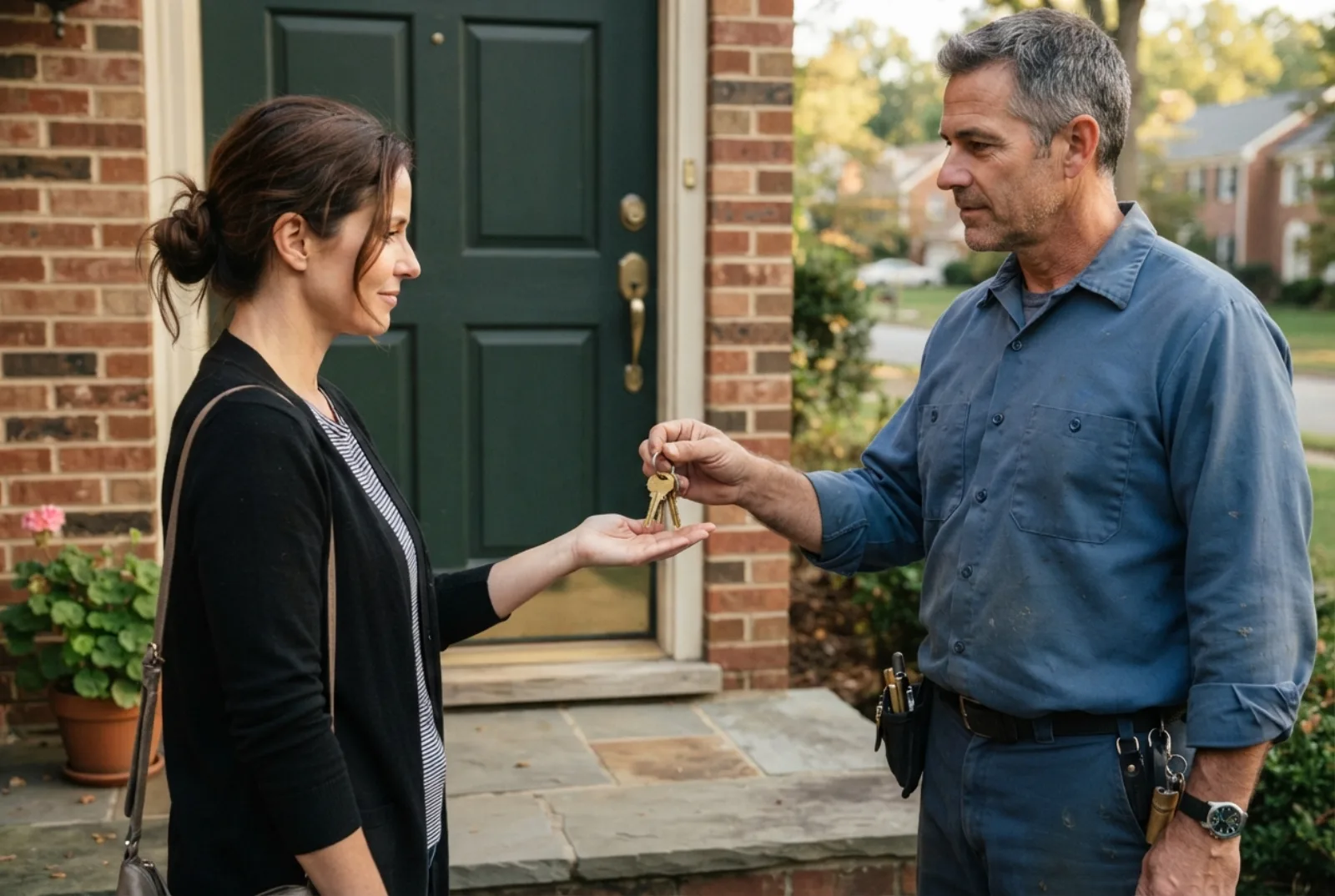
Change the locks when you move in because the number of existing keys is unknowable, not because you suspect anybody. Walk the whole property first: back door, side door, the door from the garage, the basement walk-out, the shed, the gate, and the garage keypad code. Rekey the healthy locks, replace the tired ones, ask for a single key that works everywhere, and do it all in one visit — the trip costs more than the pins.
Frequently Asked Questions
Q: The seller says they handed over every key. Is that enough?
A: They are probably being honest about the keys they know about. The issue is the ones they do not — the copy a contractor cut, the spare an old neighbour still has in a drawer. Rekeying closes the question in a way that a conversation cannot.
Q: How long does a whole house take?
A: Most houses are a single visit of an hour or two, depending on the number of doors and whether any of them need new hardware rather than a rekey. Walking round with you first is part of it, so you know what you are paying for before anything is unscrewed.
Q: Can every door end up on one key?
A: Usually. If the locks share a brand and keyway it is straightforward. If they are a mix, some will need replacing to match, and we would tell you which and what that adds before starting.
Q: I am renting. Can I change the locks?
A: Ask your landlord first — in Maryland that is generally required, and the normal arrangement is that they hold a copy of the new key. There are specific legal protections in domestic violence situations, so if that is the circumstance, say so and get advice rather than working it out from a blog post.
If you have just closed, call 800-214-8901 with a rough count of doors and we will tell you what the visit looks like.